SPC vs LVT Flooring: Which Is Right for Your Home?
30 October 2026
You've narrowed your flooring search down to vinyl, a smart move for the UAE climate. But now you're stuck on two letters' worth of difference: SPC or LVT? They look almost identical in the showroom, the prices overlap, and every salesperson seems to have a favourite. It's the single most common question we hear, and the good news is the answer is simpler than it looks once you know what actually separates them.
Both are excellent vinyl floors that suit UAE homes beautifully. The real difference comes down to their core, and that one detail shapes how each feels, performs, and where it works best. Let's compare SPC flooring and LVT flooring head to head so you can choose with confidence.
|
The Quick Answer The core difference is the core. SPC (Stone Plastic Composite) has a rigid, stone-based core that's harder, more stable, and water-resistant, best for high-traffic and wet areas. LVT (Luxury Vinyl Tile) has a flexible core that's softer and warmer underfoot, best for comfort in bedrooms and living rooms. Choose SPC for maximum durability; choose LVT for maximum comfort. |
SPC vs LVT: The Core Difference
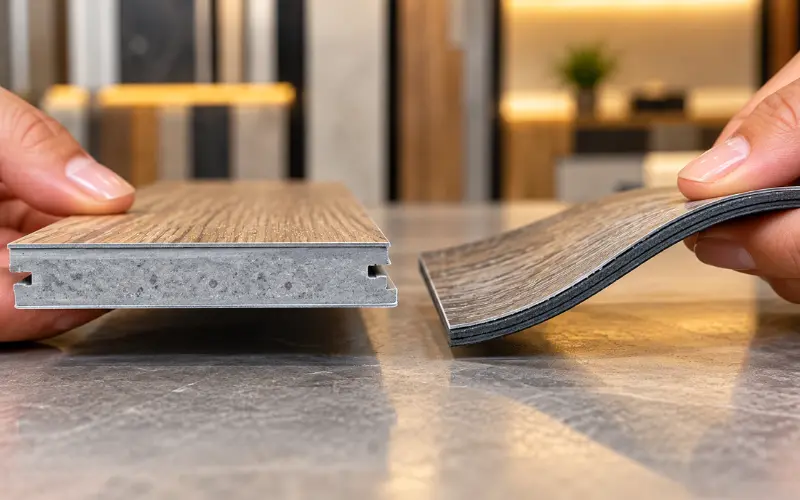
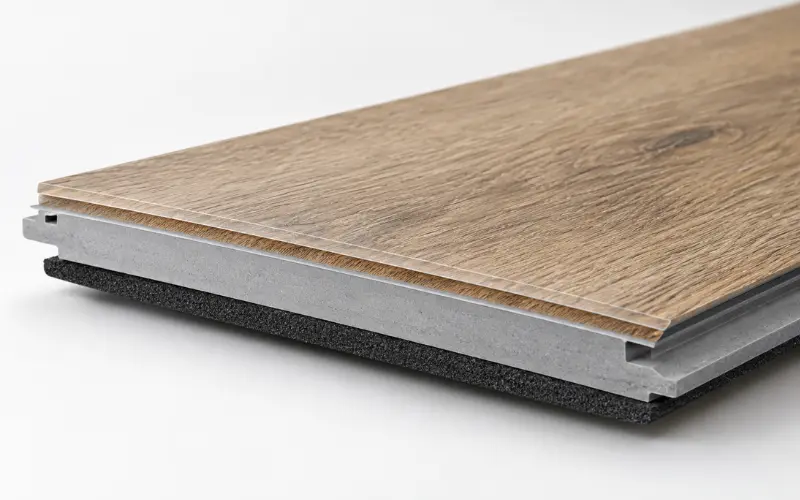
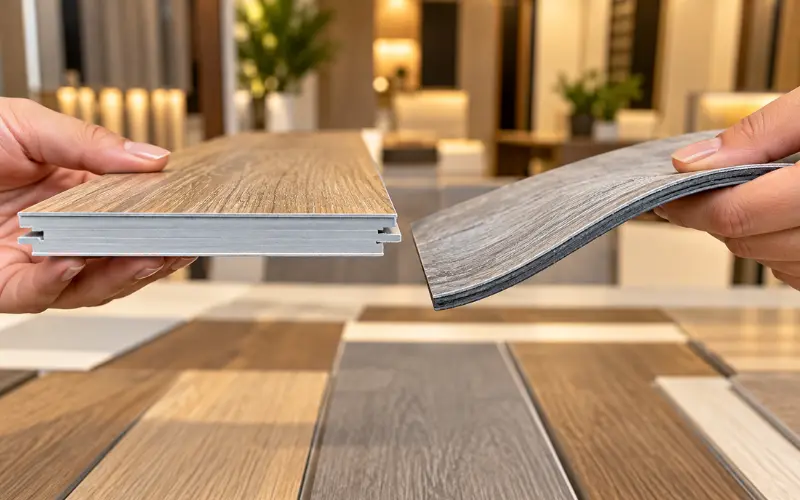
Both SPC and LVT are types of vinyl flooring with a printed design layer sealed under a protective wear layer. What separates them is what's underneath:
• SPC: a rigid core of limestone powder and PVC. Hard, dense and dimensionally stable.
• LVT: a softer, more flexible vinyl core. Comfortable, warm and quiet.
That single structural choice ripples through everything else, from how the floor feels to which rooms it suits. Let's go factor by factor.
Durability: SPC Takes the Lead
SPC's rigid stone core makes it more resistant to dents and heavy impacts, so it's the tougher option for busy households, offices, and anywhere furniture gets moved around. LVT is still durable and scratch-resistant, but its flexible core can show dents under very heavy point loads more easily than SPC.
Water Resistance: SPC Is Fully water-resistant
Both handle moisture well, but there's a meaningful difference. SPC is water-resistant thanks to its stone core, making it the safer pick for bathrooms, kitchens, and laundry zones. LVT is highly water-resistant and fine for most rooms, but for constantly wet areas, water-resistant SPC gives extra peace of mind.
Comfort & Warmth: LVT Wins Underfoot
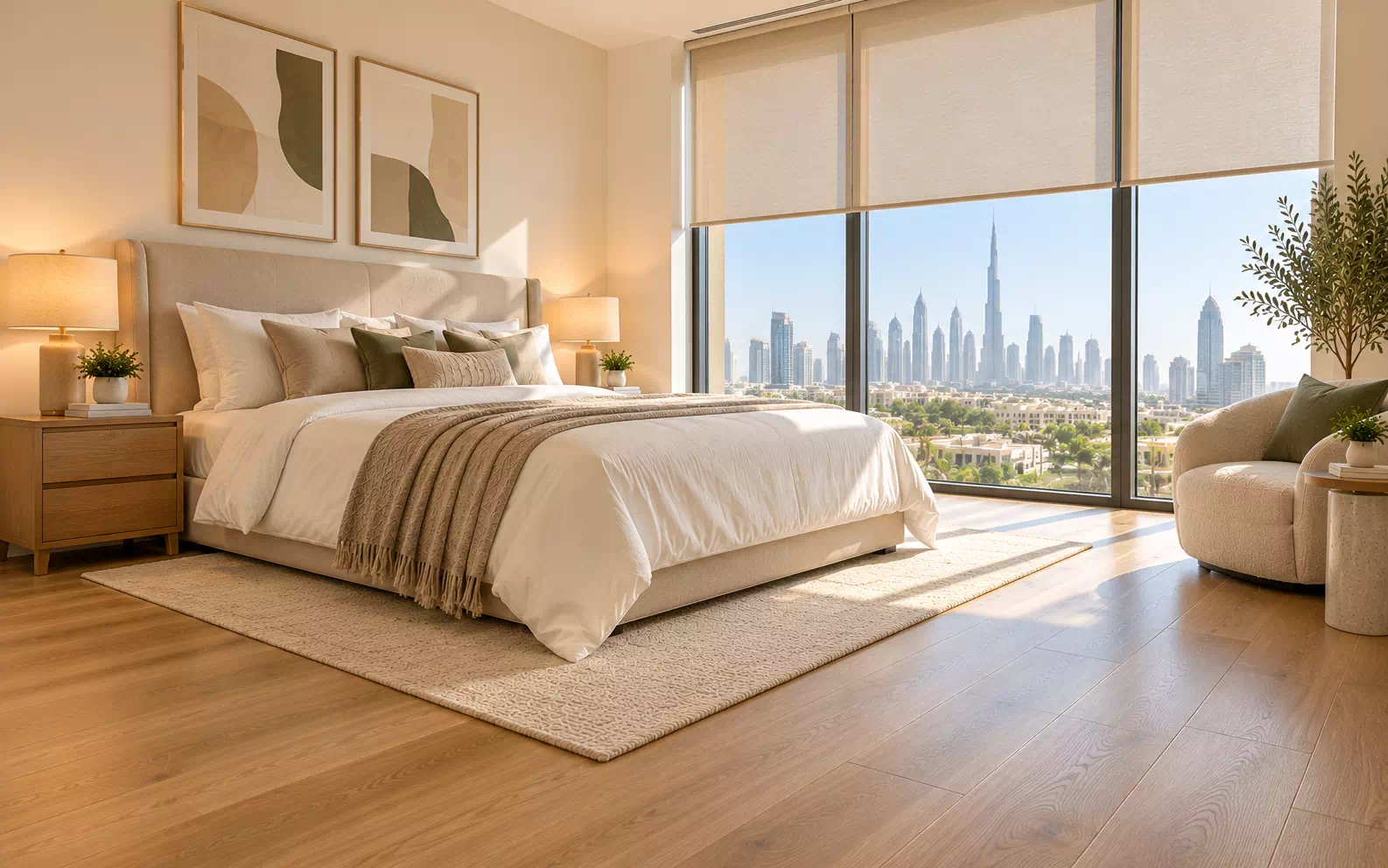
Here's where LVT shines. Its flexible core feels softer, warmer, and quieter to walk on, which is why so many people choose it for bedrooms and living rooms. SPC feels firmer and more solid, closer to tile, though its attached foam underlay softens that noticeably.
|
📊 MARKET INSIGHT The global SPC flooring market is forecast to grow from about USD 4.36 billion in 2024 to USD 24.45 billion by 2035, a 16.97% annual growth rate. SPC's rapid rise reflects strong demand for rigid, water-resistant floors, especially in warm climates where stability matters. |
Stability in UAE Heat
In the UAE, temperature stability matters. SPC's rigid core barely moves with heat, so it resists gapping and buckling, a real advantage in sun-drenched rooms and near large windows. LVT is also stable but, being more flexible, benefits from proper acclimatisation before installation. Both outperform real wood and laminate here.
Installation: Both Are DIY-Friendly
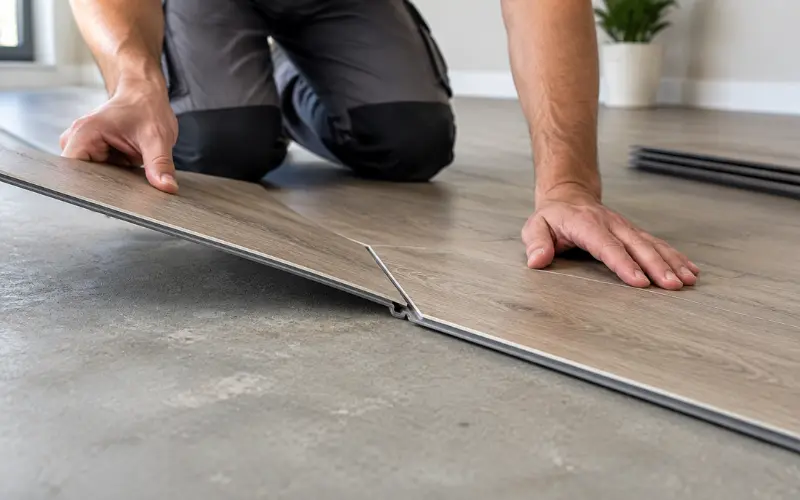
Most SPC and much of our LVT use a click-lock system that floats over the subfloor with no glue, and you can usually walk on it right away. Some LVT is glue-down for an ultra-firm feel. In all cases the subfloor should be dry, clean, and level, and our How to Measure guide helps you order the right quantity.
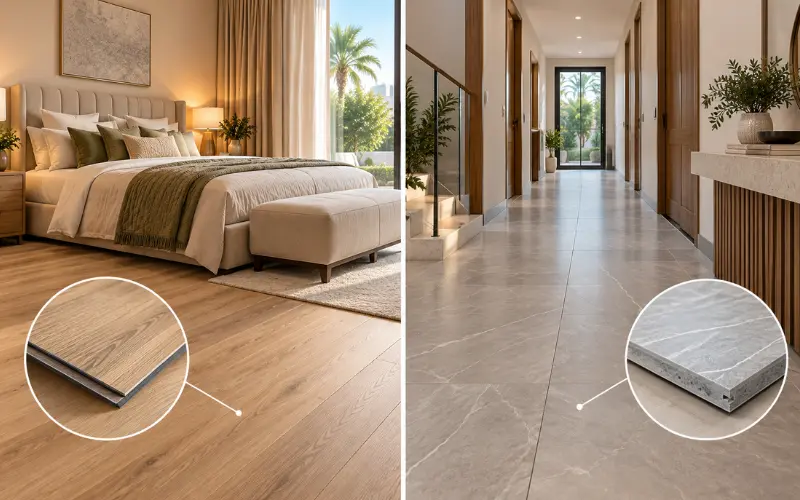
SPC vs LVT: Head-to-Head Comparison
Here's everything side by side so you can weigh it up at a glance:
|
Factor |
SPC Flooring |
LVT Flooring |
|
Core |
Rigid stone-composite |
Flexible vinyl |
|
water-resistant |
Water-resistant |
Highly water-resistant |
|
Durability |
Excellent (dent-resistant) |
Very good |
|
Comfort underfoot |
Firm, solid |
Soft, warm, quiet |
|
Heat stability |
Excellent |
Very good |
|
Best rooms |
Kitchens, baths, hallways |
Bedrooms, living rooms |
|
Starting price |
From ~AED 57/m² |
From ~AED 61/m² |
|
📊 MARKET INSIGHT The global luxury vinyl tile (LVT) market is expected to grow from USD 17.74 billion in 2025 to USD 21.12 billion by 2030. LVT's continued growth shows how much homeowners value its comfort and realistic looks, even as rigid SPC surges alongside it. |
Price & Value: Very Close
Cost rarely decides this one, because SPC and LVT overlap heavily in price. Our factory-direct SPC starts from around AED 57 per m² and our LVT from around AED 61 per m², with value ranges like Polar and premium options like Richmond at both ends. Thickness, finish and collection affect the final figure far more than the SPC-versus-LVT label, and you can often save on clearance stock. For more buyer questions, our FAQs page is a handy next stop.
Which Should You Choose?
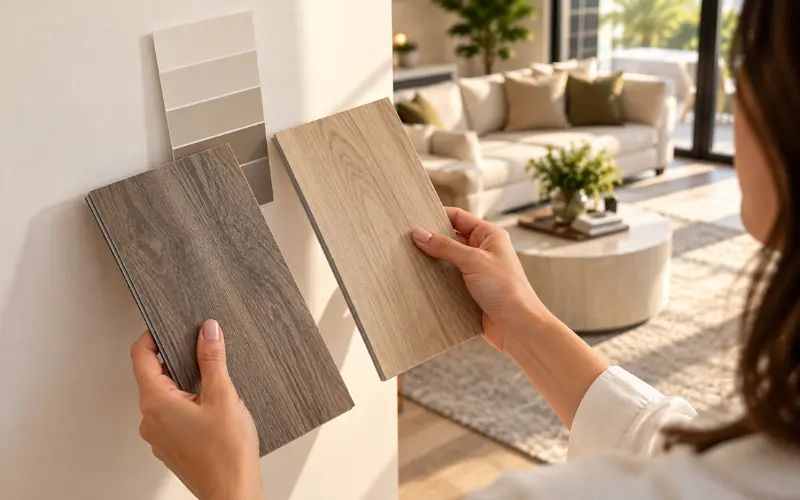
Still torn? Use this simple rule of thumb based on what each room needs most:
|
Choose SPC if… |
Choose LVT if… |
|
You need water resistance (kitchen, bath) |
You want the softest, warmest feel |
|
The room is high-traffic or commercial |
The room is a bedroom or quiet lounge |
|
You want maximum dent resistance |
Comfort underfoot is your top priority |
|
You're laying over concrete or tile |
You want a slightly cosier acoustic feel |
|
Stability in heat is critical |
You love a specific LVT wood or stone look |
Can You Mix SPC and LVT in One Home?
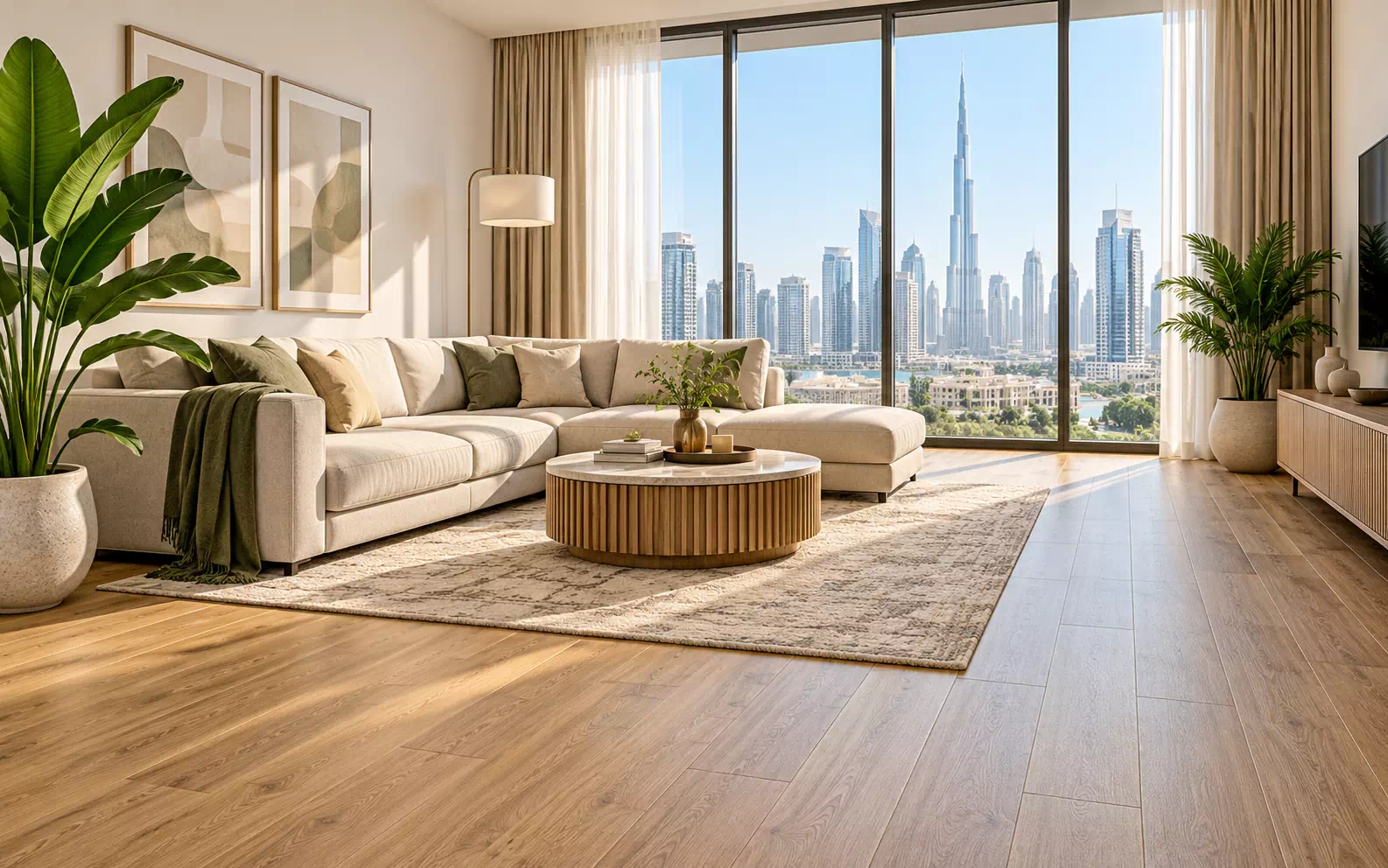
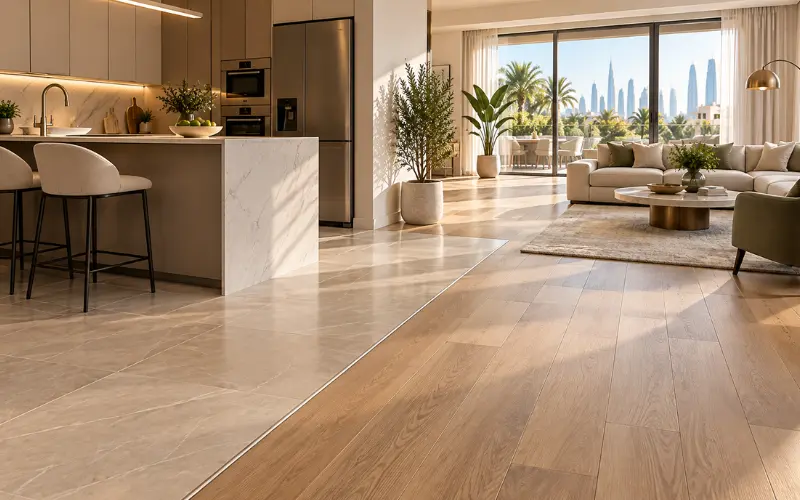
Absolutely, and many UAE homeowners do exactly that. A popular approach is SPC in the wet and busy zones (kitchen, bathrooms, hallway) and LVT in the comfort zones (bedrooms, lounge). Choosing coordinating colours across our collections keeps the look consistent from room to room. You don't have to pick just one for the whole house.
|
COMPARE BOTH RANGES SPC or LVT? Compare Them Side by Side The best way to decide is to see and feel both. Browse our full SPC and LVT collections together, compare colours, finishes and specs, and order up to 5 free samples delivered UAE-wide so you can test them in your own rooms before you buy. |
|
📊 MARKET INSIGHT The UAE resilient flooring market is forecast to reach USD 350.2 million by 2030, up from USD 220.2 million in 2024, an 8.3% annual growth rate. Both SPC and LVT sit within this fast-growing resilient category, the go-to flooring class for the UAE's demanding climate. |
The Bottom Line
There's no single winner, only the right floor for the right room. Pick SPC for water-resistant toughness in busy and wet areas, and LVT for cosy comfort in bedrooms and lounges, or mix both for the best of each. When you're ready, order free samples to make the final call in your own home.
|
WHY CHOOSE CHEAP FLOORS SPC & LVT, Supplied & Delivered Across the UAE Cheap Floors is a UAE flooring specialist supplying both SPC and LVT direct from the factory at the lowest prices. Enjoy free expert advice, up to 5 free samples delivered UAE-wide, formaldehyde-free antibacterial floors, fast delivery, and flexible payment with Tamara. We're a supply-only specialist, delivering quality flooring to your door, ready to install. |
Frequently Asked Questions
Is SPC better than LVT?
Neither is universally better; they suit different needs. SPC is harder, more stable and fully water-resistant, ideal for high-traffic and wet rooms. LVT is softer and warmer underfoot, ideal for bedrooms and lounges. The best choice depends on the room.
Is SPC or LVT more expensive?
They overlap in price. Our SPC starts from around AED 57/m² and LVT from around AED 61/m², with premium ranges costing more. Finish, thickness, and range affect the final price more than the SPC-versus-LVT label alone.
Can I use SPC and LVT in the same home?
Yes. Many UAE homeowners use SPC in kitchens, bathrooms, and hallways for water-resistant durability, and LVT in bedrooms and living rooms for comfort. Choosing coordinating colours keeps the whole home looking cohesive.